Architecting Resilience: Addressing Fragmented Intelligence in Critical Infrastructure Protection
Securing vast border and infrastructure assets requires moving beyond isolated data silos toward integrated, agentic intelligence frameworks. This analysis explores the technical architecture required to achieve multi-agency coordination in high-stakes environments.
AI-generated image
The Challenge of Operational Fragmentation
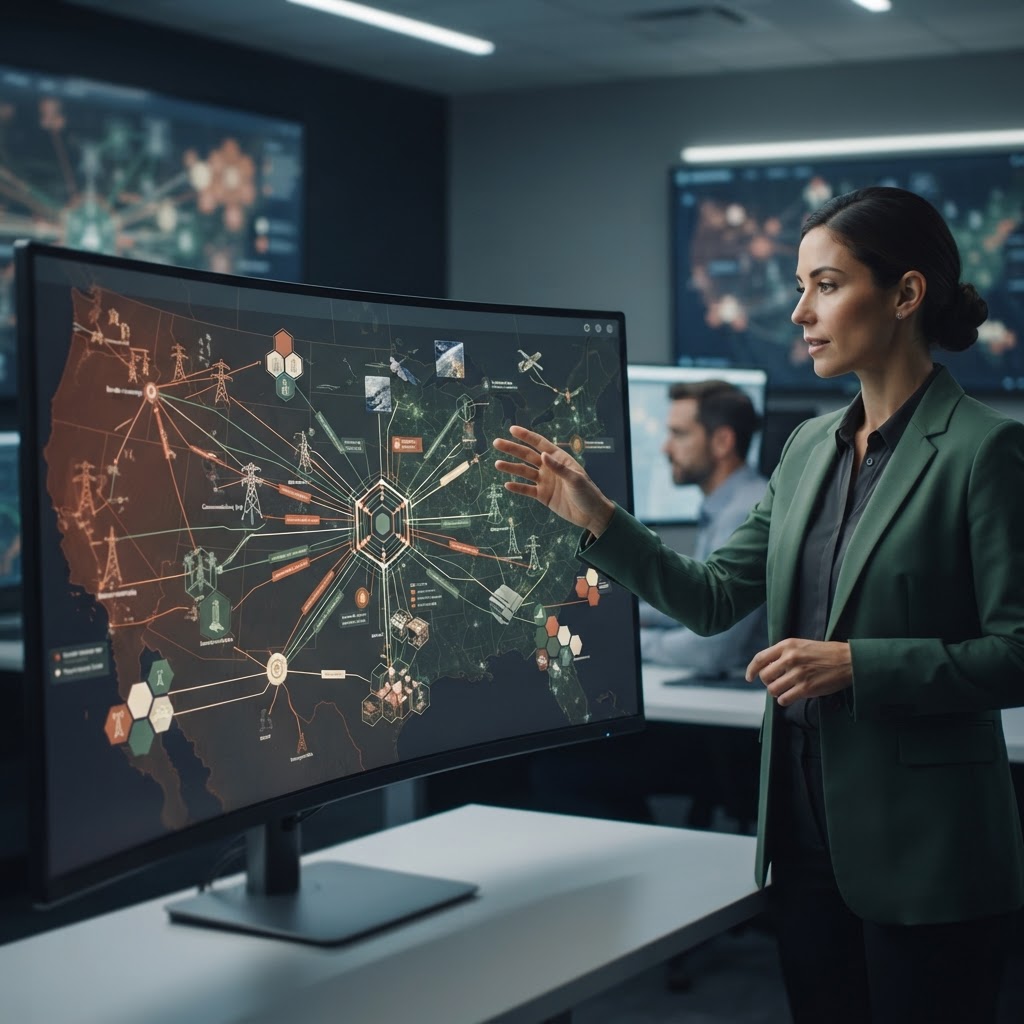
Protecting critical infrastructure and vast border regions presents a persistent challenge: the collision of extreme scale with operational fragmentation. Technical architects and decision-makers often face a scenario where data collection sensors—ranging from geospatial assets to unmanned systems—operate in isolated environments. The resulting 'data drag' prevents the rapid synthesis of intelligence necessary to identify emerging threats in real-time.
In these high-stakes environments, the primary hurdle is not a lack of data, but the inability to achieve coherence across diverse, multi-agency intelligence streams. When security infrastructure lacks a unifying logic, human decision-makers are forced to manually correlate disparate signals, leading to latency that is unacceptable in critical scenarios.
Moving Toward Agentic Coordination
To address this, the shift must be toward an agentic information foundation. Instead of viewing security tools as standalone sensors or individual repositories, architecture must prioritize a continuous intelligence layer. This layer acts as an orchestration mechanism, allowing various platforms to communicate and react to changing environmental conditions without manual intervention for every data point.
For instance, integrating autonomous surveillance, such as the capabilities provided by SkyRanger AI, requires a robust backend that can ingest and process high-fidelity data streams. If these streams remain confined to their specific platforms, their value is diminished. By utilizing an architecture like the Swiss Agent Core, organizations can create a continuous intelligence layer that organizes incoming data into actionable signals for multi-agency stakeholders.
Securing the Intelligent Edge
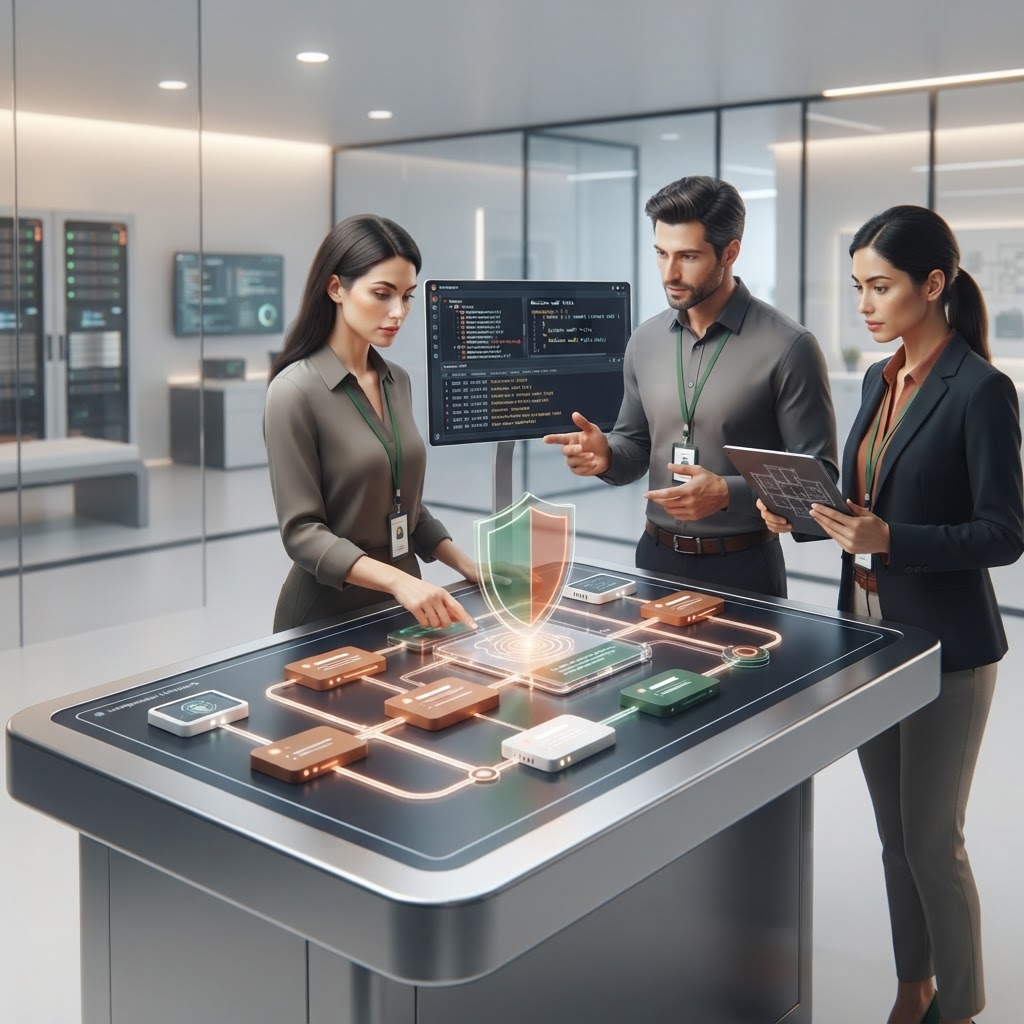
As surveillance systems become increasingly autonomous, the attack surface for critical infrastructure expands. Protecting the integrity of the data stream itself is as important as the data it produces. The deployment of AI-driven operational tools necessitates a security-first approach to the AI pipeline.
Tools like ShadowWave Core are designed to focus on securing these AI operations against adversarial interference. For technical architects, this means building resilience into the pipeline from the edge to the data center, ensuring that intelligence remains verifiable and secure, even when operating in contested or remote environments.
Integration and System Interoperability
Existing infrastructure is rarely a clean slate. Most government and enterprise entities operate on a patchwork of legacy systems, proprietary hardware, and varying communications standards. A realistic path forward is not 'rip and replace,' but strategic integration.
Systems like SkyDrift exemplify the requirement for modular connectivity—the ability to plug into existing security infrastructure to extend visibility without disrupting foundational operations. The goal is to enhance the existing perimeter, allowing for broader situational awareness while maintaining the integrity of legacy investments.
Architectural Considerations for Decision Intelligence
Ultimately, the efficacy of border and infrastructure security depends on the maturity of the decision intelligence framework. Decision-makers require more than dashboards; they require an analytical environment that can account for uncertainty.
- Data Provenance: Ensuring that all intelligence used for critical decisions can be traced to verifiable inputs.
- Semantic Interoperability: Moving beyond simple connectivity to ensure that different agencies share a common understanding of incoming signals.
- Human-in-the-loop Orchestration: Maintaining human insight within the automated loop to ensure that policy, ethics, and nuanced judgment remain central to the response process.
Conclusion: The Path Forward
Addressing threats to critical infrastructure requires moving away from discrete, siloed tools and toward a cohesive, intelligent architecture. By focusing on the integration of autonomous surveillance, secure operational pipelines, and unified agentic intelligence, technical teams can provide decision-makers with the visibility required for rapid, evidence-based response. The future of security lies in the ability to turn noise into signal, and signal into sustained, reliable protection.