The Architecture of Aerial Awareness: Challenges in Automated Drone Classification
Rapid proliferation of unmanned aerial systems presents significant operational challenges for critical infrastructure. Addressing these risks requires a structured, characteristic-based approach to classification rather than reactive detection.

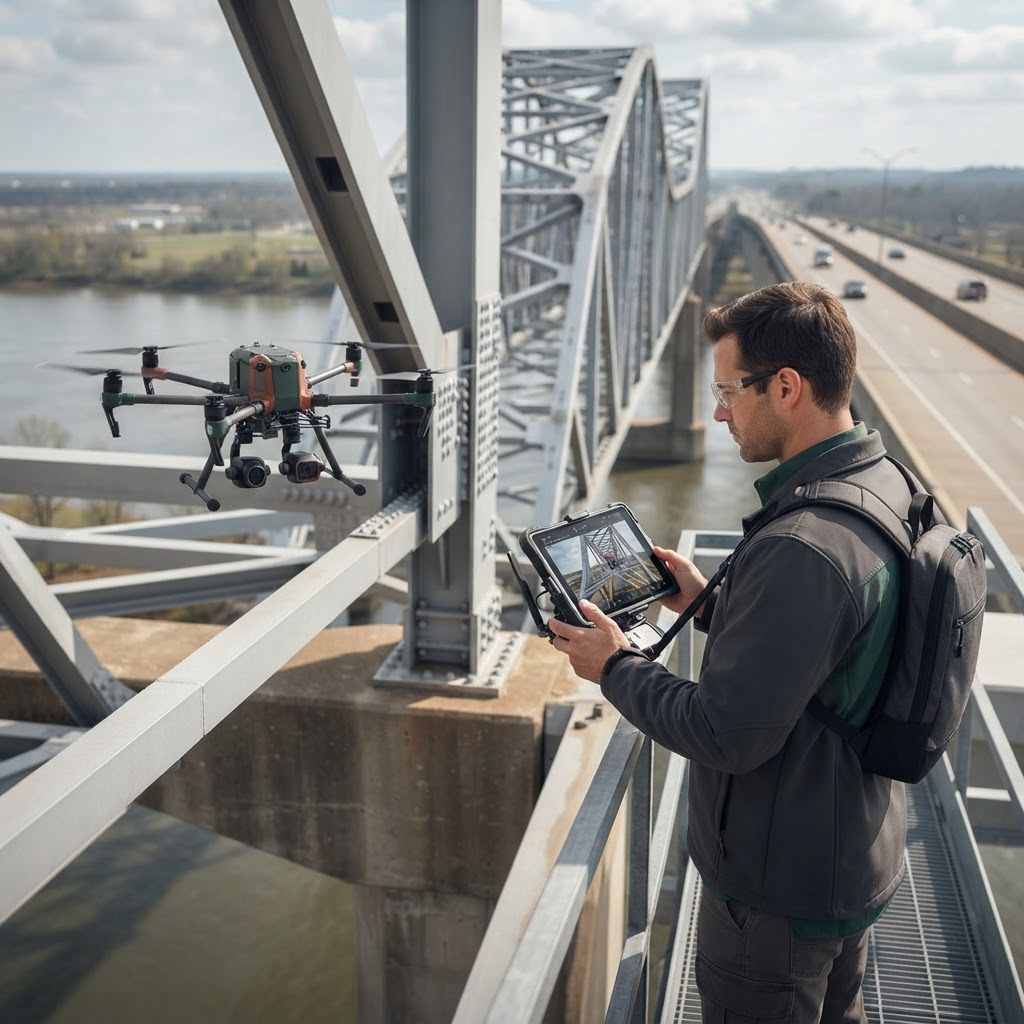
Image by PixxlTeufel on Pixabay
The Problem of Unattributed Airspace
The rapid democratization of unmanned aerial systems (UAS) has transformed modern airspace. What was once the exclusive domain of state actors and specialized enterprises is now accessible to a broad spectrum of commercial and hobbyist users. This proliferation creates a significant challenge for technical architects and program leaders responsible for the security of critical infrastructure, sensitive public spaces, and urban environments. The problem is not merely detecting a signature in the sky; the core challenge lies in the rapid, accurate identification and classification of an aerial object's capabilities and intended purpose. Without a robust classification framework, decision-makers cannot distinguish between a benign recreational device, a commercial logistics platform, or an unauthorized system operating with malicious intent.
The Limitations of Signal-Based Detection
Many conventional approaches to UAS monitoring rely heavily on basic signal detection, such as RF telemetry analysis or primary radar returns. While necessary, these methods often lack the context required for high-confidence classification. Detecting a radio frequency burst confirms the existence of a transmitter but tells the operator little about the physical platform or its potential payload. Relying solely on binary detection leads to a high rate of false positives, which can overwhelm security personnel and lead to operational fatigue. A technical architecture that relies on limited data points is inherently prone to error when faced with the diverse morphology and flight characteristics of modern UAS.
Toward Characteristic-Based Classification
To move beyond simple detection, systems must transition toward characteristic-based classification. This involves analyzing the observable traits of an object—its flight dynamics, physical dimensions, heat signatures, and communication patterns—to map it against known system profiles. The objective is to build a knowledge foundation that treats each UAS as an ensemble of features rather than a single sensor return. By standardizing the classification of these traits, organizations can better understand the operational envelope of the systems flying within their controlled airspace.
Integrating Intelligence into the Workflow
Avigdor developed SkyDrift as a drone classification system to address these specific technical gaps. The mission of SkyDrift is to provide a structured way to classify drones based on their inherent characteristics. This approach shifts the focus from 'is there something there?' to 'what is this system, and what is its performance envelope?' By organizing data around the specific technical attributes of the platform, decision-makers are empowered to weigh risks based on facts rather than speculation.
This is not a matter of singular sensor output, but of integrating intelligence. When information from multiple observation nodes is synthesized, the system can derive a more accurate profile of the aerial platform. This helps in filtering the noise of mundane commercial operations, allowing stakeholders to dedicate their limited response resources to truly anomalous activity.
Challenges in Data Consistency and Scale
One of the primary difficulties in classification is the sheer diversity of UAS platforms. A custom-built FPV (First Person View) racing drone behaves and looks significantly different from a commercial fixed-wing mapping platform. Architecting a classification system that accounts for this variance requires a rigorous data model that can adapt as the underlying technology evolves. The goal of a classification system is to provide a consistent taxonomy that can be utilized across different environmental conditions and security postures.
[Note: Research is ongoing regarding the standardization of UAS classification taxonomies globally; specific regulatory benchmarks should be verified against the latest local and international aviation authority guidance to ensure alignment with operational policies.]
Conclusion
Managing the security of modern airspace requires a move toward systematic, evidence-based classification. By focusing on the intrinsic characteristics of unmanned systems, technical leaders can build a more resilient monitoring architecture. The emphasis must remain on transforming raw sensor data into actionable intelligence, ensuring that decisions—whether to ignore, monitor, or intervene—are grounded in a technical understanding of the objects operating in our skies.